





Cloud SIEM vs On-Prem SIEM: Pros and Cons for SMB Security Teams

Cloud SIEM gives you the detection, correlation, and response capabilities of an on-prem SIEM without the hardware, the storage planning, or the upgrade cycle that comes with running one yourself. For most SMBs already living in Microsoft 365, Azure, and a growing pile of SaaS tools, that trade pays off. What you give up is a different operating model: recurring platform costs, a degree of vendor dependency, and a real need to control what you ingest before the bill gets silly.
For the teams we work with at Falconer Security, the technical question is almost never the sticking point. Cloud SIEM is obviously possible. The harder question is whether the team can actually run detection, investigations, and response with the people and budget they have, and on that count cloud SIEM usually wins because it takes the platform babysitting off their plate.
Short answer: Cloud SIEM is usually the better fit for SMBs and mid-market teams. It scales faster, handles modern SaaS and cloud telemetry more naturally, and pairs well with automation. On-prem SIEM still earns its place when data residency, legacy systems, or strict internal control requirements outweigh the operational drag.
- Cloud SIEM wins for most SMBs. It deploys faster, ingests SaaS and cloud telemetry natively, and takes platform babysitting off small teams; on-prem remains for data residency, legacy estates, or strict control needs.
- Compare operating effort, not feature lists. The platform that looks cheaper on the spec sheet can cost a fortune in people-hours for patching collectors, expanding storage, and keeping queries fast during incidents.
- Consumption pricing punishes messy onboarding. Ingest everything with verbose retention and no tuning and the bill turns ugly within weeks; ingest control and retention tiers are day-one decisions.
- A healthy on-prem SIEM can stay. If a mature deployment already does its job, ripping it out to chase a trend risks predictable migration failures in data mapping, detection parity, and analyst retraining.
- The platform never fixes operations. With breaches averaging $4.44 million per IBM’s 2025 report, you still need detection tuning, response playbooks, and a named owner, or you have bought a log bucket.
What is cloud SIEM?
Cloud SIEM is a security information and event management platform delivered as a service. It collects, stores, normalizes, correlates, and analyzes security telemetry from sources like Microsoft 365, Entra ID, endpoints, firewalls, SaaS apps, servers, and cloud workloads. Microsoft describes Microsoft Sentinel as a cloud-native SIEM with built-in SOAR, which is a decent shorthand for the whole category: one place for visibility, detections, investigations, and response, minus the SIEM infrastructure you would otherwise stand up and maintain.
On-prem SIEM does the same jobs. What changes is where the platform runs, how it scales, and who carries the operational weight. Run it yourself and your team owns the servers, the storage, the upgrades, the retention design, and usually the database tuning that keeps searches from grinding to a halt. Move it to the cloud and the vendor takes most of that layer off you.
Here is the mistake I see on almost every assessment. Buyers compare feature checklists line by line and never once compare operating effort, so a platform that looks cheaper on the spec sheet turns out to cost a fortune in people-hours: patching collectors, expanding storage, unclogging ingestion pipelines, and keeping performance stable at exactly the moment an incident is unfolding and you cannot afford a slow query.
Cloud SIEM vs on-prem SIEM: the practical differences
| Area | Cloud SIEM | On-prem SIEM |
|---|---|---|
| Deployment speed | Usually faster, especially for SaaS and cloud data sources | Slower because infrastructure, storage, and architecture must be built first |
| Scalability | Elastic scaling, though cost control matters | Limited by purchased hardware and storage design |
| Operations | Vendor runs the platform layer | Your team runs upgrades, tuning, patching, and performance management |
| Cloud telemetry | Usually better native support for SaaS, APIs, and multicloud logs | Can work well, but integrations are often heavier to maintain |
| Data control | Shared responsibility with vendor and cloud platform | More direct control over storage and infrastructure |
| Cost shape | Recurring subscription or consumption pricing | Higher upfront spend plus staff time and lifecycle costs |
| Automation | Often easier to connect playbooks and API-driven workflows | Possible, but usually more custom work |
Why cloud SIEM usually wins for modern Microsoft environments
If your estate already runs on Microsoft 365, Entra ID, Azure, and Defender plus a handful of third-party services, the data you care about is already sitting in cloud systems. Pulling that telemetry into a cloud SIEM tends to be far more natural than dragging it back down into an on-prem box just to reprocess it there.
Microsoft positions Sentinel as a multicloud, multiplatform service rather than a Microsoft-only tool, and that matters once you look at a real environment instead of a licensing deck. Nobody’s stack is as tidy as the slide. Teams want M365 signals, firewall logs, identity events, endpoint telemetry, and cloud activity landing in one place, and a cloud delivery model fits that collection pattern better than anything you rack yourself.
Then there is staffing, which is where most of these decisions actually get made. The 2025 ISC2 Workforce Study still points to budget and headcount pressure across security teams, and that gap bites fast when a company buys a heavyweight tool that needs constant care. On a small team, every hour spent nursing SIEM infrastructure is an hour stolen from detections, investigations, and response, which is the work you actually hired those people to do.
Buyer reality: A cloud SIEM does not magically solve alert fatigue. It gives you a more flexible platform. You still need sane onboarding, useful detection logic, retention decisions, and response playbooks.
Where on-prem SIEM still makes sense
On-prem is not dead, but it fits a narrower slice of the market than it used to. You may still prefer it if you run a large legacy environment with limited outbound connectivity, operate under strict internal policy about where telemetry is allowed to live, or need a storage model that is easier to govern inside your own data center. Some regulated shops are simply more comfortable owning the collectors, the storage tiers, and the long-term retention outright, even knowing the running cost is higher.
One case gets far less attention than it should: the organization that already sank real money into an on-prem SIEM team, its infrastructure, and a mature content library. If that setup is healthy and doing its job, ripping it out to chase a market trend is not automatically the smart move. Migrations cost money and they fail in predictable ways, usually when teams underestimate data mapping, detection parity, and the retraining every analyst needs before the new platform is trustworthy.
The real advantages of cloud SIEM
The strongest case for cloud SIEM comes down to fit, not fashion.
Cloud platforms are generally better at ingesting modern telemetry, particularly from SaaS and cloud services, and they scale more cleanly when log volume spikes. That last part matters most during an incident. The worst time to learn your search performance falls apart is the moment you need to pivot across identity, endpoint, and email data to figure out how far an attacker got.
Automation is the other big one. Sentinel supports automated response through playbooks built on Logic Apps, so common triage and containment steps get standardized instead of hand-run every single time an alert fires. That is a large part of why cloud SIEM slots so well into a managed SIEM services model, where the service team builds a workflow once and reuses it, rather than reinventing the response on every ticket.
Visibility is the last piece. According to the 2025 Verizon DBIR, stolen credentials remain heavily involved in system intrusion breaches, and that kind of attack path runs straight across identity, endpoint, SaaS, and cloud control planes. A cloud SIEM is usually better placed to stitch those signals together, mostly because the integrations were API-first from the start.
The trade-offs nobody should ignore
Cloud SIEM has downsides. Pretending otherwise makes for bad buying advice, so here are the ones worth arguing about before you sign anything.
Cost volatility is the big one. Consumption-based pricing punishes messy onboarding without mercy: dump everything into the platform, keep every verbose log forever, tune nothing, and you have built yourself an expensive mess in a matter of weeks. We have written before about Sentinel cost optimization for exactly this reason, because it is the failure mode we watch teams walk into most often.
Vendor lock-in is quieter but real, because over time your data model, your detections, and your workflows all get tightly coupled to one platform, and that coupling is worth pricing in even when it is not a dealbreaker.
The last one only shows up under pressure. The 2025 IBM Cost of a Data Breach Report puts the global average breach at $4.44 million, and a number that big has a way of tempting people to buy every log source in sight and keep it forever. It should not. What it actually argues for is a SIEM design that helps you detect and contain incidents without turning your telemetry bill into a second budget crisis all its own.
Data governance rounds out the list. NIS2 never tells you to buy a cloud SIEM, but Article 21 does require risk-management measures that support incident handling, detection, and the security of your network and information systems. If you fall under EU obligations, you still owe yourself clear answers on where telemetry sits, who can reach it, and how retention lines up with your policies and contracts. The actual text matters more than any vendor’s marketing gloss, so start with the NIS2 Directive itself rather than somebody’s summary blog.
How to decide between cloud SIEM and on-prem
Start with your environment, not the platform demo. A few honest reads on your own situation will settle this faster than any vendor bake-off:
- If most of your critical systems already live in Microsoft 365, Azure, and SaaS platforms, cloud SIEM is the default.
- If your team is small and stretched thin, cloud SIEM is usually the only realistic option.
- If you carry unusual data residency demands, long-term internal retention rules, or a large legacy estate, test the on-prem case honestly before dismissing it.
- If your priority is faster deployment and less platform maintenance, cloud SIEM has the clear edge.
- If your priority is absolute infrastructure control, on-prem still has a seat at the table.
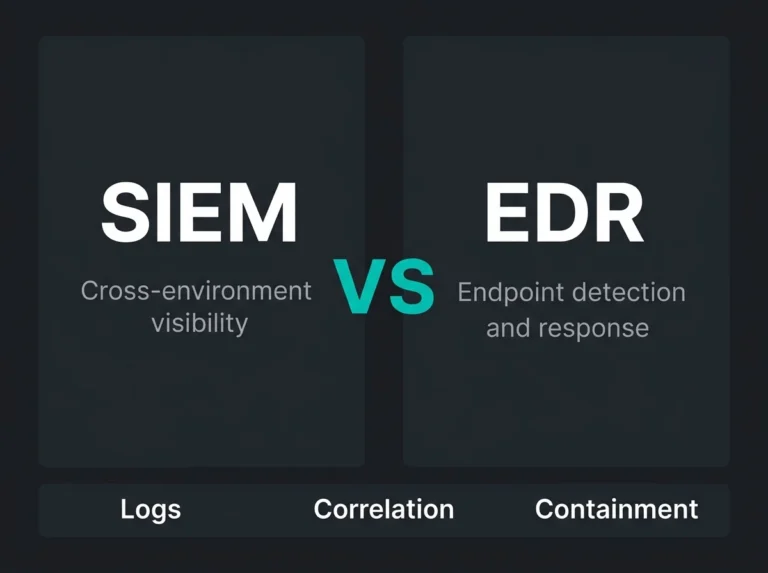
Response maturity belongs in the same conversation. If you are still working out who investigates alerts, who owns containment, and what happens after triage, then the SIEM form factor is not your real problem, and platform choice will matter less than workflow maturity every single time. It is why teams weighing MDR vs SIEM so often realize they need both a platform and the operating muscle to run it.
What Falconer usually recommends
For SMB and mid-market organizations in Microsoft-heavy environments, we lean toward cloud SIEM, and more specifically toward a platform with strong native integrations, cost controls you can actually see, and automation you will actually use. In practice that often points buyers at Microsoft Sentinel or another modern service with good SaaS coverage.
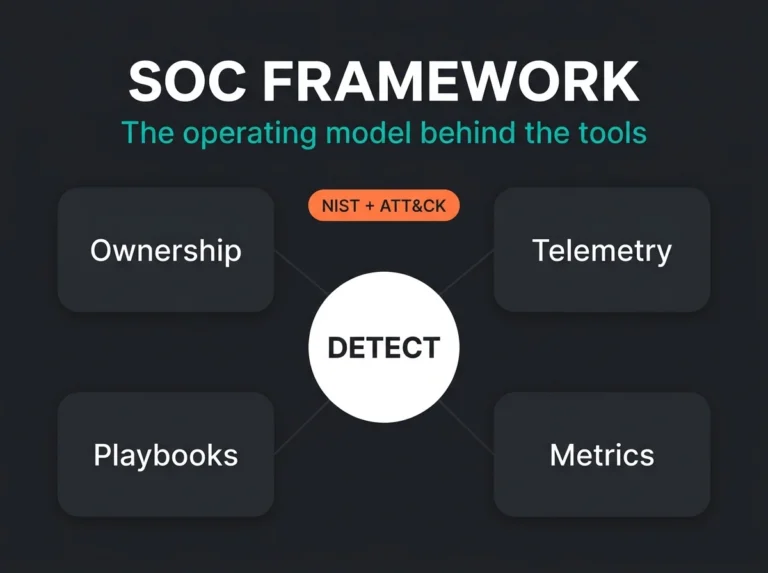
The trap, every time, is assuming the platform alone fixes operations. It does not. You still need onboarding discipline, retention tiers, connector reviews, detection tuning, and one named person accountable for the response workflow. I have walked into beautifully licensed deployments that were, in practice, very expensive log buckets nobody was watching.
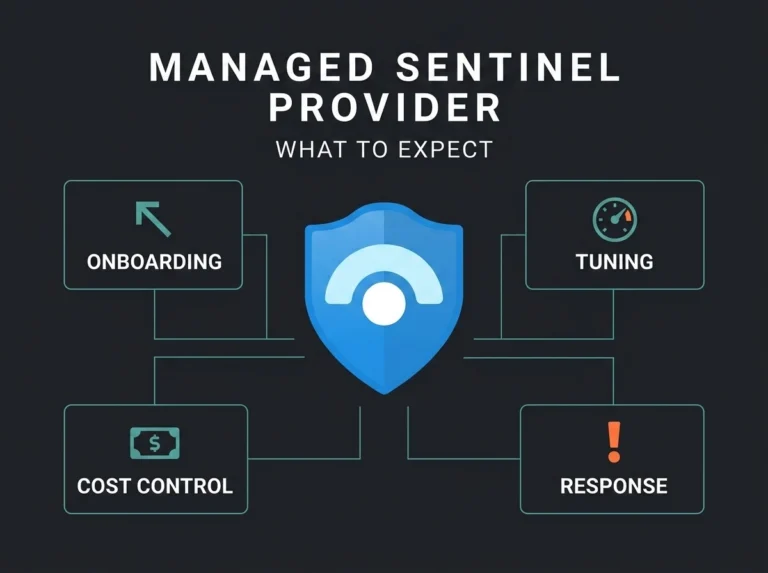
Choose cloud SIEM when you want speed, elasticity, and a better match for modern telemetry. Keep on-prem in the conversation only when your control requirements or legacy dependencies genuinely justify the extra operational load. And if you want a Microsoft-native route without building an internal SOC from scratch, our Managed Sentinel service and broader managed security services are built around exactly that operating model.
FAQ
What is the difference between cloud SIEM and traditional SIEM?
Cloud SIEM is delivered as a service, so the vendor handles most of the platform infrastructure. Traditional on-prem SIEM runs on systems your organization manages directly, which means more control but also more work around storage, patching, scaling, and upgrades.
Is cloud SIEM more secure than on-prem SIEM?
Not by default. Security depends on architecture, identity controls, logging coverage, retention decisions, and response workflows. Cloud SIEM often gives smaller teams stronger capabilities faster, but a badly configured cloud deployment can still fail in all the usual ways.
When should a company keep an on-prem SIEM?
Keep on-prem SIEM in the running when you have strict internal control requirements, large legacy systems, or data-handling constraints that make cloud delivery difficult. It can also make sense if you already have a mature team and a healthy on-prem deployment that meets your needs.
Is Microsoft Sentinel a cloud SIEM?
Yes. Microsoft documents Sentinel as a cloud-native SIEM with built-in SOAR capabilities. That makes it a strong fit for organizations already invested in Microsoft 365, Azure, Entra ID, and Defender telemetry.
Does NIS2 require a cloud SIEM?
No. NIS2 does not require a specific SIEM product or delivery model. It requires appropriate risk-management measures, incident handling capability, and security controls. A cloud SIEM can help meet those goals, but it is not a compliance shortcut on its own.