





24/7 SOC Service: What Good Coverage Actually Looks Like

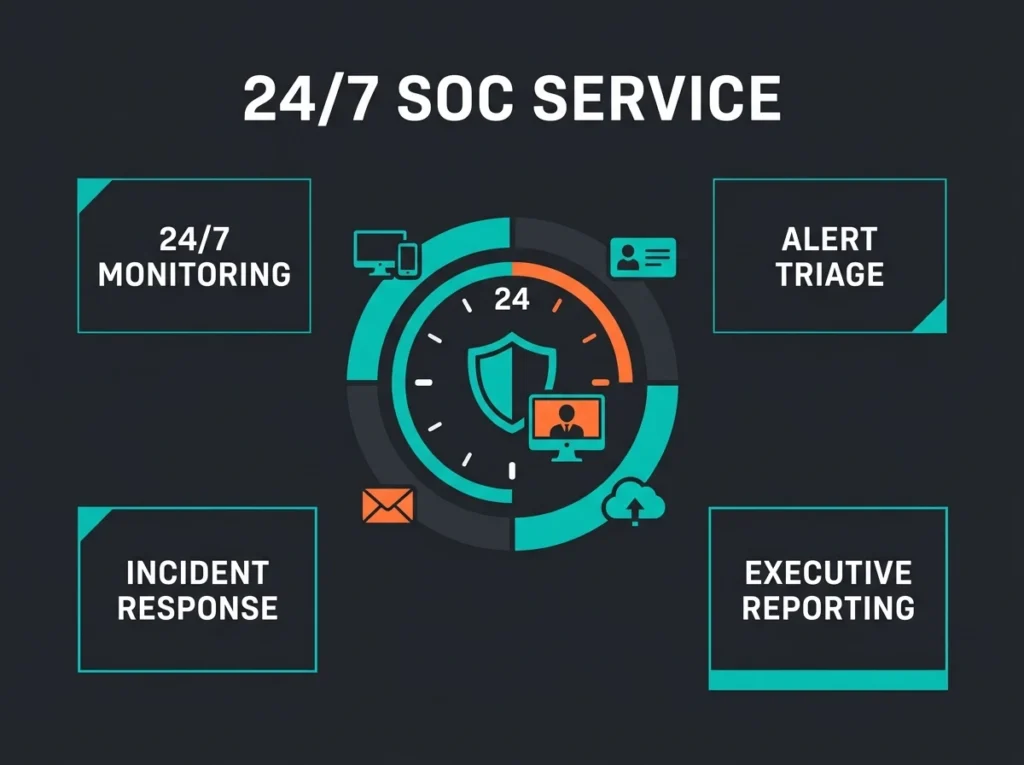
At 02:17, nobody cares whether your SIEM dashboard looks impressive. What matters is who is awake, who can separate noise from a real intrusion, and who is allowed to act before the problem spreads. That is what you are really buying with a 24/7 SOC service.
For most SMBs, a 24/7 SOC service is not about owning a flashy security operations center. It is about getting continuous monitoring, triage, investigation, and response coverage without staffing night shifts yourself. Falconer Security usually sees the same pattern in Microsoft-heavy environments: good tooling, patchy ownership after hours, and too much faith in tickets that nobody reads until morning.
The short answer is simple. A 24/7 SOC service makes sense when delayed detection would hurt the business, but building and retaining your own round-the-clock team is unrealistic. The hard part is not buying monitoring. It is buying response.
- You are buying response. The value of a 24/7 SOC service is pre-agreed containment authority at 02:00, not another monitoring dashboard; weak providers notify, strong ones act.
- Verify true continuous coverage. Many offers are business-hours triage with escalation rules, which leaves you with a mailbox and an SLA rather than a night shift.
- The threat math is blunt. Verizon’s 2026 DBIR puts ransomware in 48% of breaches and software vulnerabilities behind 31%, and IBM prices the average breach at $4.44 million.
- SIEM is not a SOC. The platform collects and correlates but is neither awake nor accountable; without operators it is infrastructure waiting for ownership.
- NIS2 does not mandate it. Article 21 requires incident handling and continuity measures, and whether that demands round-the-clock coverage depends on your after-hours risk.
What a 24/7 SOC service actually includes
A proper 24/7 SOC service gives you continuous security operations coverage across alert monitoring, investigation, escalation, and incident response coordination. That usually sits inside a broader managed security services model, but the quality varies wildly from provider to provider.
At minimum, the service should cover:
- Round-the-clock alert monitoring across endpoint, identity, cloud, email, and network telemetry
- Human validation of suspicious activity so your team is not drowning in false positives
- Clear escalation paths for high-severity incidents outside office hours
- Documented response actions, not just notifications
- Regular detection tuning and reporting on what the SOC is seeing
That last item matters more than vendors admit. A SOC that only watches alerts will decay fast. Attackers change, your environment changes, and detections that were sensible three months ago can become either blind or noisy.
24/7 SOC service vs daytime monitoring
Plenty of providers offer monitoring that sounds continuous but is really business-hours triage with after-hours escalation rules. If that is the model, call it that. It can still be useful. It is not the same as a true 24/7 SOC service.
| Area | 24/7 SOC service | Business-hours monitoring |
|---|---|---|
| Coverage window | Continuous, including nights, weekends, and holidays | Usually office hours with limited on-call rules |
| Alert handling | Analysts investigate in real time | Alerts often queue until staff are online |
| Response speed | Faster containment when authority is pre-agreed | Response often depends on your internal team waking up |
| Best fit | Organizations with material after-hours risk | Lower-risk environments or interim coverage |
A lot of buyers discover this too late. They thought they purchased a security operations function. What they actually bought was a mailbox with an SLA.
Why after-hours coverage matters now
The case for 24/7 coverage is not marketing drama. It is simple arithmetic. According to Verizon’s 2026 Data Breach Investigations Report, 31% of breaches now start with software vulnerabilities, 48% involve ransomware, and 15% of attack techniques are being bolstered by generative AI. Attackers do not wait for Monday morning, and exploited systems do not pause because your IT lead is asleep.
Staffing is the second problem. The 2025 ISC2 Cybersecurity Workforce Study says economic pressure, budget constraints, and skills shortages are still weighing on security teams. In practice, that usually means one of two ugly setups: a small internal team pretending to offer 24/7 coverage, or a good internal team burning itself out trying.
Then there is breach cost. IBM’s Cost of a Data Breach Report 2025 says the global average breach cost sits at $4.44 million. That is not a prediction for every Nordic SMB, but it is a useful reminder that delayed detection gets expensive fast, especially once legal, customer, and operational cleanup start stacking up.
What a good 24/7 SOC service should do at 02:00
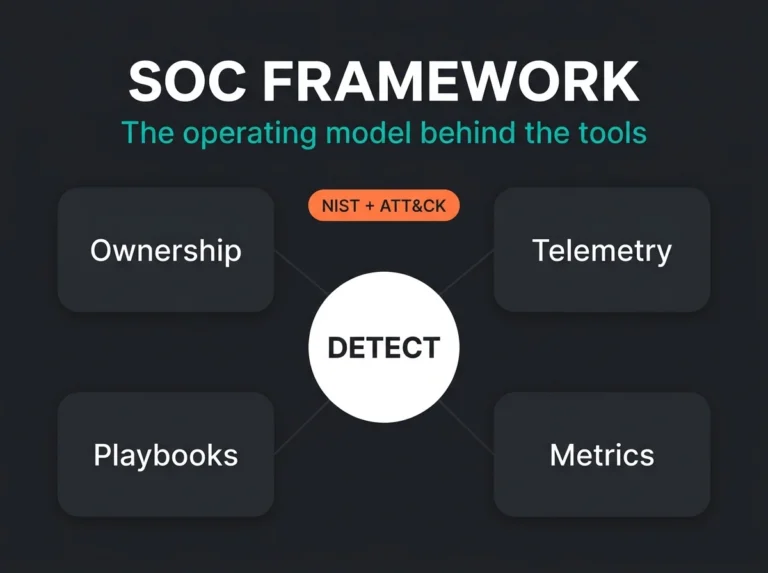
A strong provider should not be debating ownership while an attacker is moving laterally. Before the service goes live, you want agreed playbooks for containment, call paths, severity levels, and what actions the SOC can take without waiting for permission.
In practical terms, that means the provider should be able to:
- Confirm whether suspicious activity is a real incident or a false alarm
- Correlate signals across identity, endpoint, email, and cloud platforms
- Escalate to the right people with evidence, scope, and recommended actions
- Take predefined containment steps where authority exists
- Hand over a clean incident record for follow-up the next day
The difference between a decent service and a weak one often sits right there. Weak providers notify. Strong providers decide, document, and move.
Where 24/7 SOC fits with MDR, MSSP, and SIEM
These labels get mixed together constantly. A 24/7 SOC service is the operating capability. MDR is usually a threat detection and response service, often narrower in scope and more focused on active threats. An MSSP is the provider model that may deliver the SOC, plus other managed security functions. A managed SOC is the closest commercial label to what most buyers mean here.
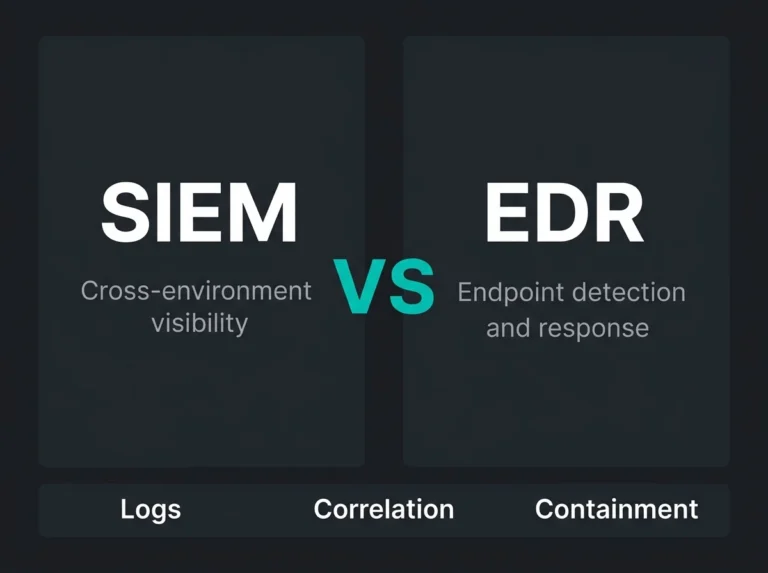
Your logging platform is separate again. A SIEM collects and correlates telemetry. It is not awake. It is not accountable. If you already have a SIEM and nobody is genuinely operating it around the clock, you do not have 24/7 security operations. You have infrastructure waiting for ownership.
I see this mistake a lot in mid-market buying cycles: the tool budget gets approved more easily than the staffing budget, so the business convinces itself the platform solved the problem. It did not.
Why Microsoft-heavy SMBs feel the gap faster
Microsoft environments create a strange illusion of safety. You can buy strong controls in Entra ID, Defender, Exchange Online, and Azure. You can even centralize telemetry in Sentinel or another SIEM. From a procurement angle, it looks mature. From an operations angle, the weak spot often shows up after hours.
Identity alerts, suspicious inbox activity, impossible travel, endpoint detections, cloud misconfigurations, and risky OAuth behavior do not arrive in neat batches. They show up at inconvenient times and in different consoles. That is why a 24/7 SOC service has to correlate across tools instead of watching one queue in isolation. If the service only stares at endpoint alerts, it will miss how email, identity, and cloud events connect.
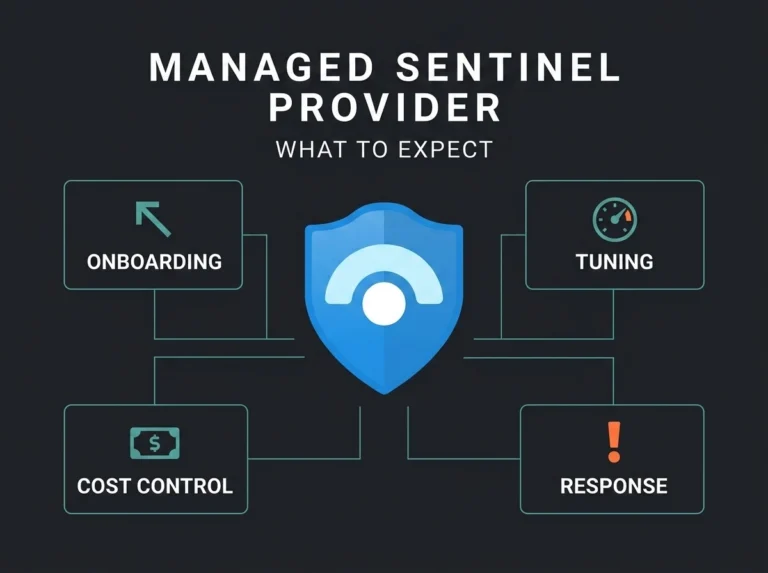
This is also where a Microsoft-native operating model helps. The provider should know what matters in Defender XDR, what belongs in escalation, what can wait, and what usually turns out to be license noise. Plenty of teams pay for rich telemetry and still end up with weak coverage because nobody owns the cross-product story when alerts start stacking up overnight.
Red flags that should kill the deal
Some provider pitches fall apart the moment you ask operational questions. Good. Better to find that out in the sales cycle than during an incident.
- They promise 24/7 monitoring but cannot explain who is on shift after hours.
- They escalate everything to your team and call that response.
- They price the base service attractively, then charge extra for investigation during real incidents.
- They report alert volume but avoid talking about false positives, tuning cadence, or time to containment.
- They want broad access but cannot describe how they protect your data or separate client environments.
I would add one more. Be careful with providers that lean too hard on automation language. Automation is useful. It is also easy to hide behind. When a vendor talks endlessly about AI and workflows but stays vague about analyst ownership, that usually means the humans are thinner on the ground than the brochure suggests.
Questions to ask before you sign
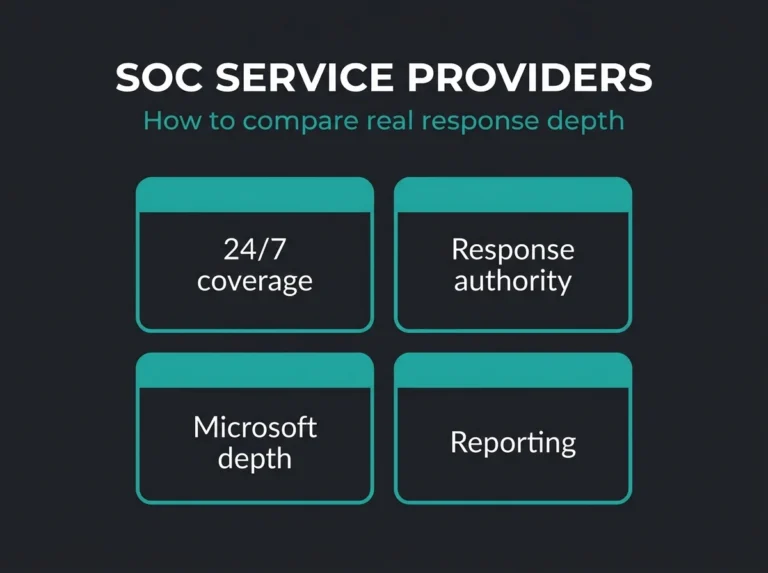
If you are comparing providers, the smart questions are not about dashboards. Ask these instead:
- Who investigates alerts after hours: named analysts, rotating engineers, or automation only?
- What containment actions can you take without waiting for us?
- How do you handle Microsoft 365, identity, endpoint, and cloud telemetry together?
- How often do you tune detections and review false positives?
- What does escalation look like at 03:00 on a Sunday?
- What is included in the monthly fee, and what becomes billable during an incident?
If the answers stay vague, keep walking. A provider that cannot explain its night-shift operating model in plain language will not become clearer during an incident.
Does NIS2 require a 24/7 SOC service?
Not directly. The NIS2 Directive does not say you must buy a 24/7 SOC. What it does require, under Article 21, is a set of cybersecurity risk-management measures that include incident handling, business continuity, and security in network and information systems.
That matters for Swedish and Nordic operators because the practical question becomes whether your current operating model can detect and handle incidents fast enough to support those obligations. In some environments, business-hours monitoring may be enough. In others, especially where customer-facing systems, regulated services, or cloud identity sprawl are in play, after-hours blind spots become hard to defend.
Who should buy a 24/7 SOC service?
A 24/7 SOC service is usually the right move when your company has meaningful attack surface, limited internal security depth, and real consequences if incidents wait until office hours. That often includes Microsoft-centric SMBs, multi-site businesses, regulated service providers, and MSPs that need to extend security coverage without building a full analyst bench internally.
It is also a sensible fit when you are already buying adjacent services. Companies reviewing SOC vendors or weighing the economics in SOC as a Service pricing usually land on the same point: the business does not just need alerts, it needs dependable after-hours ownership.
If that is your situation, do not buy the biggest SOC because the slide deck looks polished. Buy the service model that can see enough, act fast enough, and fit the way your team actually works.
FAQ: 24/7 SOC service
What is a 24/7 SOC service?
A 24/7 SOC service gives you continuous security monitoring, investigation, escalation, and response coordination across all hours, including nights and weekends. The best services combine tooling with human analysts who can make decisions in real time.
Is a 24/7 SOC service the same as MDR?
No. MDR usually focuses on threat detection and response, often around endpoints, identity, cloud, or email. A 24/7 SOC service is the broader security operations function that can sit inside MDR, alongside it, or inside a wider MSSP offering.
Do small businesses need a 24/7 SOC service?
Some do, some do not. If your business has limited after-hours exposure and strong internal coverage, you may not need full round-the-clock operations yet. If ransomware, identity compromise, or customer-facing downtime would hit hard, delayed response gets risky quickly.
Does NIS2 mean we need around-the-clock monitoring?
NIS2 does not explicitly require a 24/7 SOC service. It does require appropriate risk-management measures, incident handling, and business continuity. Whether 24/7 monitoring is appropriate depends on your risk profile, obligations, and how quickly incidents need to be handled in practice.
What should we check in a provider contract?
Focus on after-hours analyst coverage, containment authority, escalation paths, incident communication, response times, reporting, and what is excluded from the base fee. If the contract is precise about alerts but vague about action, that is a warning sign.